
Free energy,
your Energy
Free shipping
❋
No taxes
❋
No hassle
❋
Free shipping ❋ No taxes ❋ No hassle ❋
Hot arrivals
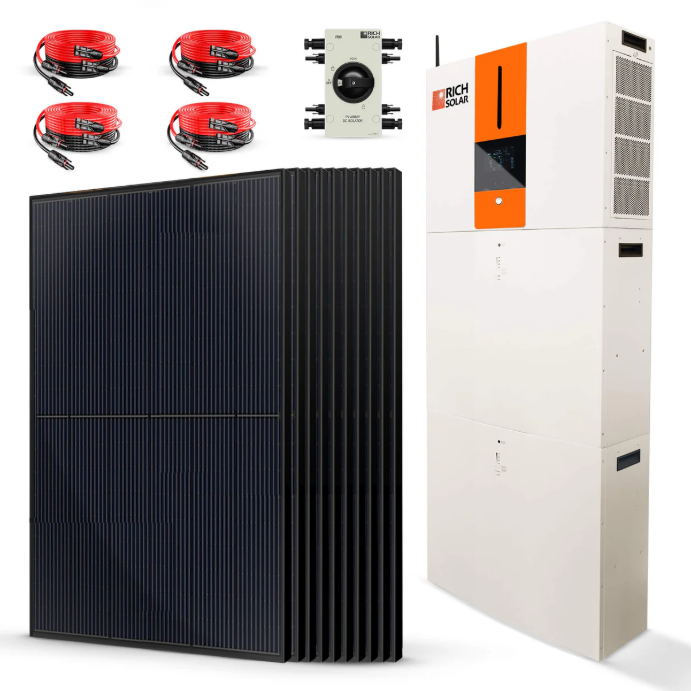
Kit Includes:
1x All-in-One Energy Storage System
10x MEGA 400 Watt Monocrystalline Solar Panels
2x 10 Gauge Solar Panel Extension Cable with Male and Female Solar Connector Ends
2x 10 Gauge Extension Cable to Connect Solar Panel to Hybrid Inverter
1x Solar PV DC Quick Disconnect Switch
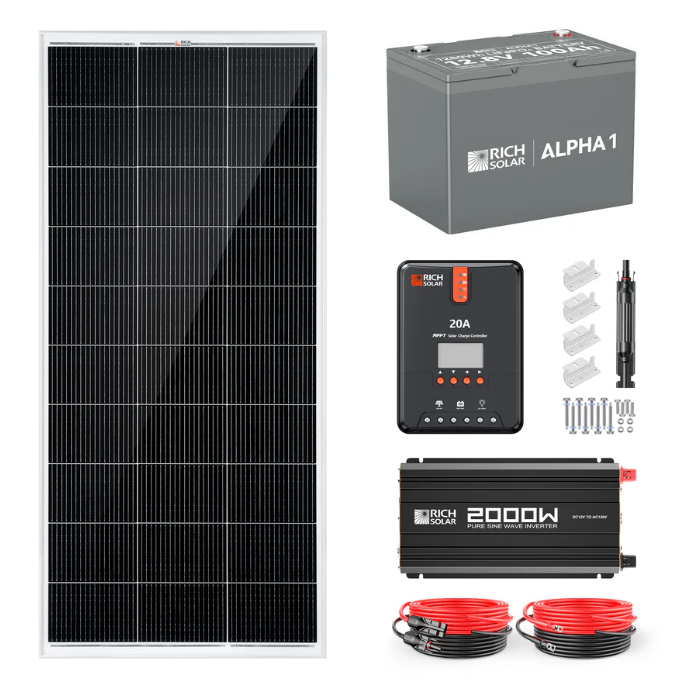
Kit Includes:
1 x MEGA 200W 12V Panel (RS-M200)
1 x ALPHA 1 Lithium Battery (RS-B121S)
1 x NOVA 2000W 12V Inverter (RS-V2P12)
1 x 20A MPPT Charge Controller (RS-MPPT20)
1 x Z Bracket Set (RS-ZB4C)
1 x 15A Solar Panel Inline Fuse Holder (RS-SC15F)
1 x 2/0 Gauge 3FT Cable Set (Inverter to Battery) (RS-2/0A3F3)
1 x 30' 10 AWG Solar Cable Set (Panel to Controller) (RS-30101)
1 x 10' 10 AWG Battery Cable Set (Controller to Battery) (RS-1010)
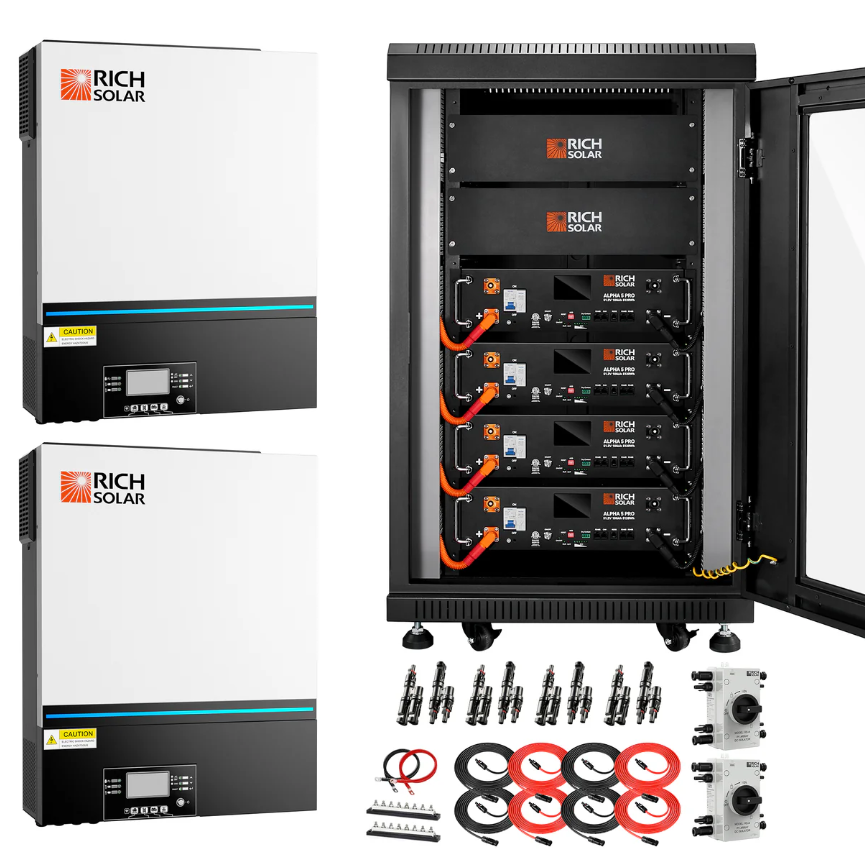
Kit Includes:
2 x 6500 Watt (6.5kW) 48 Volt Off-grid Hybrid Solar Inverter (RS-H6548)
4 x 5.12kWh ALPHA 5 PRO Server Lithium Iron Phosphate Battery (RS-B5121P)
2 x Solar PV DC Quick Disconnect Switch (RS-i4)
2 x Busbar 600 AMP
4 x 4 Foot 2/0 Gauge AWG Wire Set 3/8"
8 x 10 Gauge 50 Feet Solar Extension Cable (RS-50102)
4 x 10 Gauge 30 Feet Solar Extension Cable (RS-30102-T2)
1 x Free Battery Rack
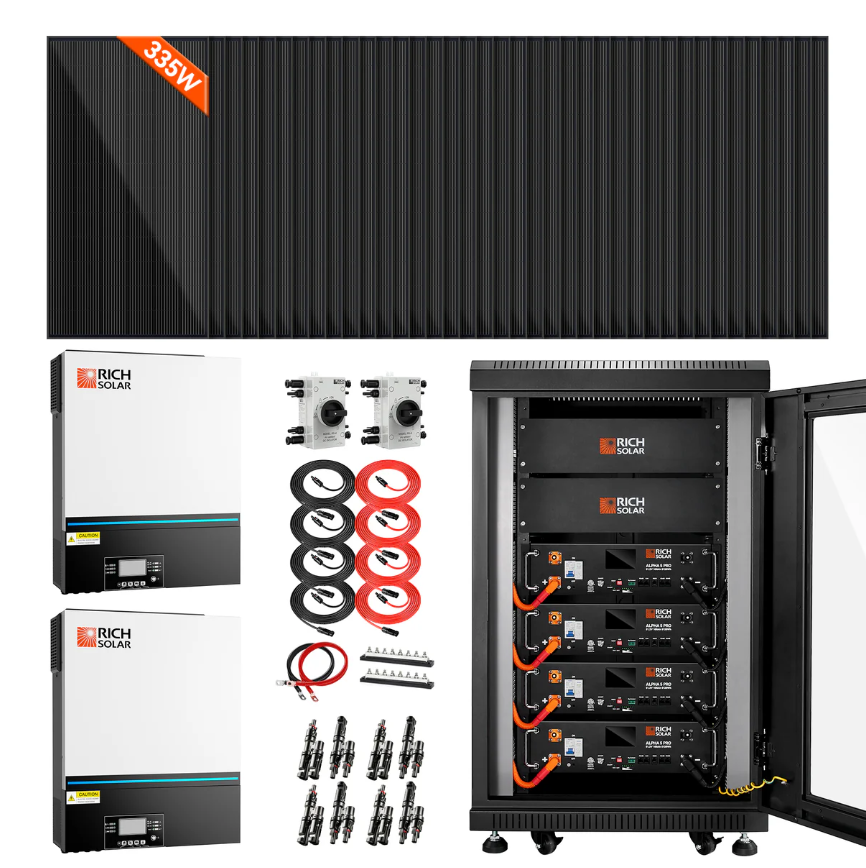
Kit Includes:
30 x MEGA 410 Watt Monocrystalline Solar Panel (RS-M410)
2 x 6500 Watt (6.5kW) 48 Volt Off-grid Hybrid Solar Inverter (RS-H6548)
4 x 5.12kWh ALPHA 5 PRO Server Lithium Iron Phosphate Battery (RS-B5121P)
2 x Solar PV DC Quick Disconnect Switch (RS-i4)
2 x Busbar 600 AMP
4 x 4 Foot 2/0 Gauge AWG Wire Set 3/8"
8 x 10 Gauge 50 Feet Solar Extension Cable (RS-50102)
4 x 10 Gauge 30 Feet Solar Extension Cable (RS-30102-T2)
1 x Free Battery Rack
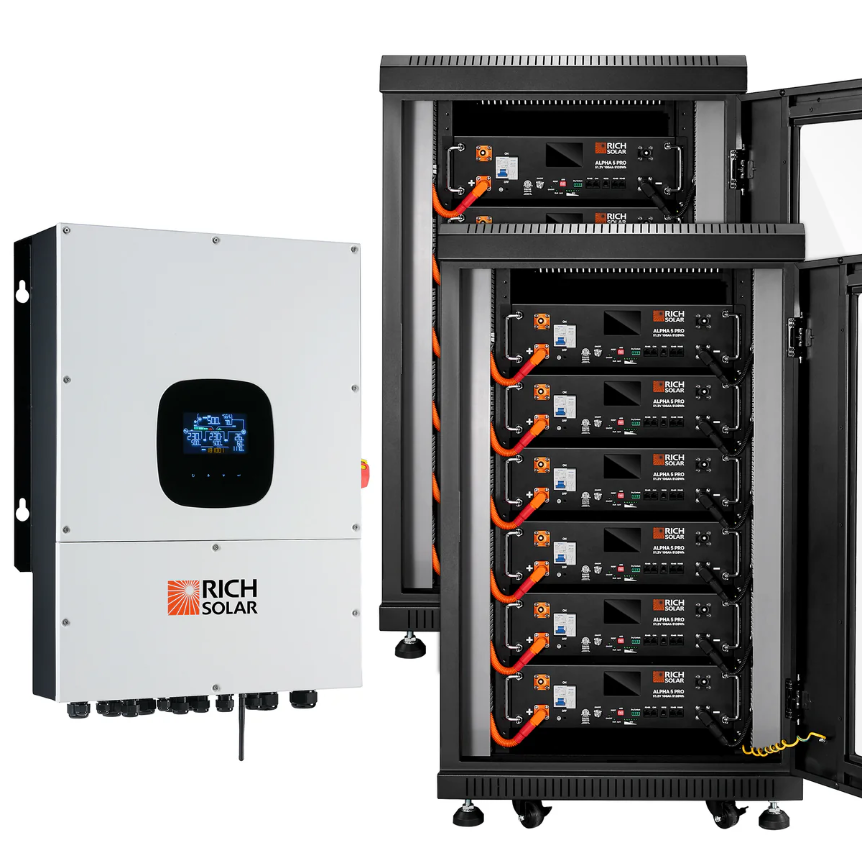
Coming SoonComplete Hybrid Solar Kits
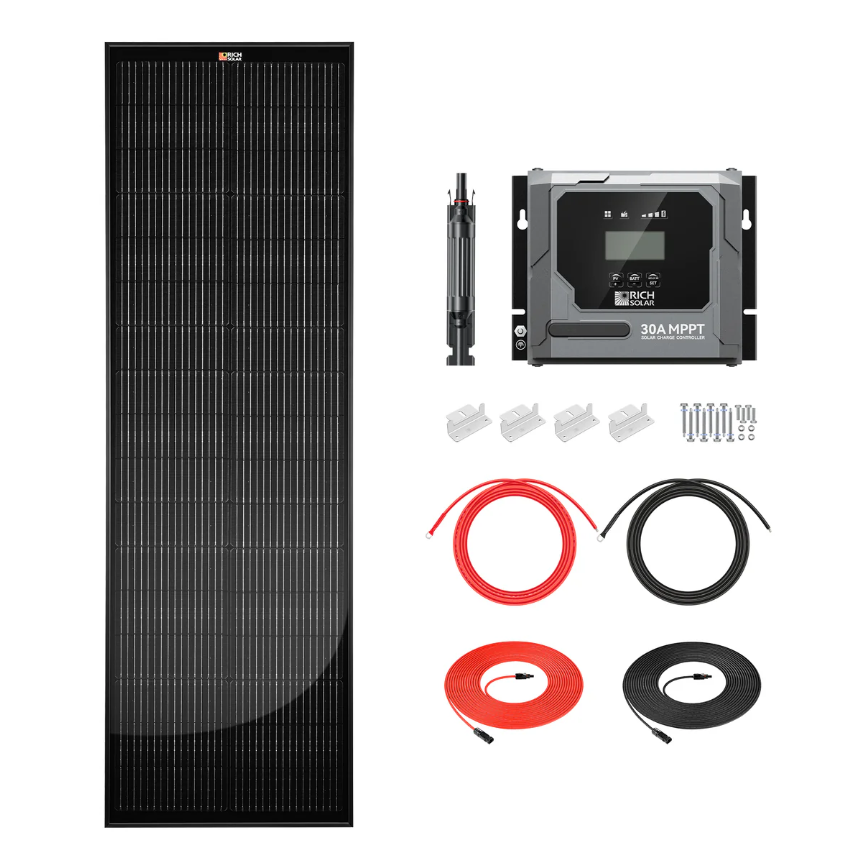
Coming SoonSlim & Van Kits
-
Solar power gives your RV the ability to run any of your electrical appliances without needing to worry about power sources. Solar panels convert the sun’s energy into direct current electricity (DC), charging your RV’s batteries and storing electricity. A power inverter converts the DC power to alternative current (AC) which runs many of your appliances on the RV.
-
Solar power gives your RV the ability to run any of your electrical appliances without worrying about power sources. Solar panels convert the sun’s rays into direct current electricity (DC), charging your RV’s batteries and storing electricity. A power inverter converts the DC power to alternative current (AC) that many of your appliances use on the RV.
-
Grid-tied systems connect and work directly with your utility grid, offering an alternative energy source in addition to what your utility company provides. You can greatly or completely reduce your electricity bill by utilizing grid-tied systems. In addition, depending on the size of your system, you may receive monetary returns.
Off-grid systems are not connected to the utility grid and are sustained using a battery bank. The battery bank connects to an inverter that converts DC voltage to AC voltage, allowing you to use any AC appliances or electronics. Common off-grid applications include cabins, RVs, boats, and camps. Off-grid systems can also be used in a variety of other applications, including emergency power backup during a power outage.
-
Any of your appliances can adequately run on solar power. However, you may need other components to transfer the power generated from a solar panel successfully.
Most common home appliances run on AC power, such as a TV. As such, you will need an inverter to properly transfer the power from AC to DC.
Off-grid refrigerators like those used in RVs can run on either DC or AC. Depending on the specific type, you may need an inverter.
Water pumps can also run on solar power, but be sure to read the manual to check to see if an inverter is needed. -
Depending on the number of appliances, how much power they use, whether you are grid-tied or off-grid, and the size of the battery bank you have installed (including if you have a battery bank), the exact length of time can change drastically. Call our customer service representatives at 1-800-831-9889, or contact us through email at support@richsolar.com so we can help determine your requirements.
-
Amps is the unit of measure for an electrical current, or the speed/rate of electrons. Volts measure the electrical voltage, or how much power pushes electricity through a conductor. Watts is the amount of power produced by the combination of amps and volts.
-
Solar kits offer the basics of an off-grid solar system. They contain a solar panel, solar charge controller, and cables. A solar system, also called a solar energy system or a solar power system, refers to all the components that convert sunlight into electricity. It can refer to a solar kit, but it can also include other parts like an inverter, switch, battery charger, and more.
-
If you have a battery as part of your solar power system, you absolutely need a solar charge controller. A controller regulates the energy that’s generated from the solar panels and transferred into the battery, preventing the battery from overcharging. This prevents the battery from being discharged through the solar panel during the night.
-
You don’t need an inverter if you’re only charging your battery. However, if you want to use the battery to run different appliances, like a TV or a refrigerator, you need an inverter to convert the DC power to AC power.
Frequently Asked Questions
-
A modified sine wave inverter is less expensive but uses up to 30% more power and cannot run at full capacity, which causes many devices to run poorly. A pure sine wave inverter is more expensive, but it provides better power efficiency and minimal interference versus a modified sine wave inverter. RICH SOLAR recommends using a pure sine wave inverter for your solar power needs.
-
Wherever there is sunlight, solar panels will generate electricity. Cooler conditions, like those during the winter, can help improve solar panel performance. Solar panels can still generate electricity in cloudy conditions, just not as efficiently. The panel won't generate any electricity if there is any snow build-up on it, so make sure to keep the panel clear. This goes for any type of obstruction including shade or dirt.
-
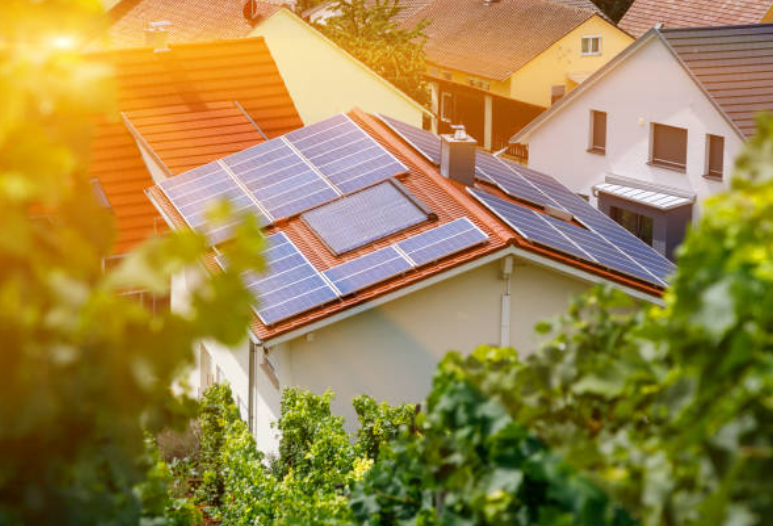
Solar panels don’t always need a roof penetration for installation. Most times, they can be permanently mounted on the roof using a sealant. Alternatively, they can be installed on the ground.
-
If you’re buying from RICH SOLAR, all the cables you need for your power pack and/or solar panels are included with your purchase. However, it’s recommended to always have a few backups just in case.
-
At RICH SOLAR, we have nominal 12V and 24V panels. Whether the panels work with a 12V, 24V, or 48V system depends on the kind of controller you use. All the RICH SOLAR controllers work with the 12V and 24V systems, but only the 60 amp controller will work with a 48V system.
-
Charging time is affected by weather, shade, angle of the panels, time of day, age and use of the battery, efficiency of the controller, position of the panels, and a variety of other factors. The best way to determine how long your battery charges is by reviewing the manual and spec sheets.